
Pipe/duct workshop manufacturers often struggle to select the best pipe bender for their operations. It’s hard to balance material compatibility, wall thickness, diameter, and bend radius with production needs and workspace limits. Choosing a heavy duty pipe bending machine that matches maximum diameter, wall thickness, and required bending radius ensures efficient, precise results. Heavy duty pipe bending machines are designed for bending large-diameter and thick-wall pipes that standard machines cannot handle.
Types of heavy duty pipe bending machines

Choosing the right pipe bender depends on the specific needs of your workshop. Each type offers unique features, operation methods, and output capabilities. The following table tells the main differences between hydraulic, NC, and CNC pipe benders:
| Type | Operation | Characteristics |
| Hydraulic | Uses hydraulic pressure for bending | High power, suitable for larger pipes, consistent output |
| NC | Semi-automatic, manual input for bends | Good for straightforward bends, cost-effective for small operations |
| CNC | Fully automated, computer-controlled | Handles complex bends, high precision, suitable for intricate designs |
Hydraulic pipe bending machines
Hydraulic bending machines use hydraulic pressure to shape pipes. They deliver high power and can handle larger diameters and thicker walls. Many workshops choose hydraulic pipe benders for heavy-duty applications. These machines provide consistent results and reduce operator fatigue. Hydraulic models often support pipe diameters up to 5.5 inches and wall thicknesses up to 0.230 inches.
NC and CNC pipe bending machines
NC (Numerical Control) and CNC (Computer Numerical Control) pipe bending machines introduce automation to the bending process. NC benders allow operators to input bend angles and lengths, making them ideal for straightforward tasks.
CNC benders use computer control to manage complex bends and multiple angles in a single setup. CNC models excel at producing intricate designs with high precision. Heavy-duty CNC benders can handle pipe diameters of 90mm and above, with wall thicknesses up to 10mm.
Tip: NC tube benders reduce downtime and boost productivity, while CNC tube benders handle complex geometries with ease.
Criteria for heavy duty pipe bending machines
Material compatibility
Selecting the right heavy duty pipe and tube bender starts with understanding material compatibility. Different metals, such as stainless steel, carbon steel, aluminum, and copper, require specific bending tools and machine settings.
Heavy-duty benders must accommodate a wide range of materials without causing cracks or deformation. Operators should confirm that the chosen metal bending machine supports the maximum diameter and wall thickness for each material type, ensuring precision bending and prevents costly material waste.
Bending capacity
Bending capacity defines the maximum pipe diameter, wall thickness, and bending angle a machine can handle. Workshops should match these specifications to their most demanding projects. The following table outlines typical specifications for a heavy duty pipe bending machine:
| Specification | Details |
| Max Bending Degree | 240° |
| Handle Length | 35-1/2” |
| Dies Equipped | 1″ x 3″, 1-1/2″ x 5″, 2″ x 6″ |
| Overall Height | 45″ |
| Weight | 158 lb |
| Size | 31” x 29” x 45” |
Heavy-duty pipe bending machines often support pipe diameters of 90mm or more, with wall thicknesses up to 10mm. Matching these capabilities to workshop needs maximizes the benefits of the investment.
Bending angles
The ability to achieve a wide range of bending angles increases the versatility of pipe benders. Many advanced models allow for bends up to 240 degrees, enabling complex shapes and tight radii.
Operators should consider the minimum bending radius required for their applications. Programmable angle settings deliver consistent results and reduce the risk of errors.
Automation features
- Robotic automation with multi-axis movement for intricate bends and complex geometries.
- Real-time quality monitoring using sensors and IoT technologies to ensure accuracy.
- CNC technology for unmatched precision and control, automating the bending process.
Automation features increase speed, reduce material waste, and improve labor efficiency. Skilled workers can focus on strategic tasks while the machine handles repetitive bending operations.
Ease of use
Ease of use remains a top priority for any workshop. Operators value intuitive controls and ergonomic design. The following table highlights user interface and ergonomic features found in leading bending machines:
| Feature | Description |
| Easy Touch Screen Operation | Simplifies machine control for operators. |
| Operator Safety Features | Enhances safety during operation. |
| Solid Machined Steel Bend Arms | Provides durability and strength. |
Touch screen interfaces and clear displays make setup and operation straightforward. Safety features protect users, while robust construction ensures durability and maintenance efficiency.
Size and weight
Workshop layout and available space influence the choice of pipe bending machine. Heavy-duty benders come in a range of sizes and weights. The table below shows typical weight ranges:
| Weight Range (Kg) |
| 315 |
| 510 |
| 650 |
| 1,600 |
Operators should plan for installation and movement within the workshop. Heavier machines may require reinforced flooring or dedicated space.
Tooling options
The versatility of a pipe and tube bender depends on its tooling options. The table below summarizes common tooling types and their features:
| Tooling Type | Features |
| Bend Die | Precision-machined, reversible, lifting holes, proprietary metallurgy for durability |
| Clamp Die | Reversible, non-interlocked, various grip designs |
| Pressure Die | Moves with the tube to conform to the bend die |
| Mandrels | Various specialty materials for support and preventing collapse during bending |
| Wiper Die | Controls compression side on the bend |
| Stackable Die Sets | For multi-bend operations, includes inter-die locating keys and hubs |
| Rotary Draw Bending | Most versatile method, suitable for high-quality wrinkle-free bends in tight radius tubes |
Rotary draw bending stands out for producing high-quality bends and preventing tube collapse.
Support and service
Heavy duty pipe bending machine manufacturer like Primapress ensures reliable support and service to extend the life of its heavy duty pipe bending machines. The company has a dedicated team of five after-sales personnel, each with more than 10 years of experience, ready to provide professional assistance.
Service is available 24/7, with a guaranteed 30-minute response time during the day, while night service is offered through 24-hour online appointments. In addition, customers benefit from round-the-clock technical support and quick delivery of parts to minimize downtime. Primapress also offers unmatched warranties on equipment, providing peace of mind and long-term value.
Budget
Budget plays a critical role in the selection process. Several factors influence the price of a heavy duty pipe bending machine:
- Machine brand: Well-known brands often command higher prices due to quality and service.
- Technical level: Advanced technology and automation increase costs.
- Function configuration: More complex machines with additional features cost more.
- Market environment: Supply and demand dynamics affect pricing, with competition driving down prices for standard models.
Operators should balance initial investment with long-term value, considering durability and maintenance costs. Choosing the right machine within budget ensures a strong return on investment.
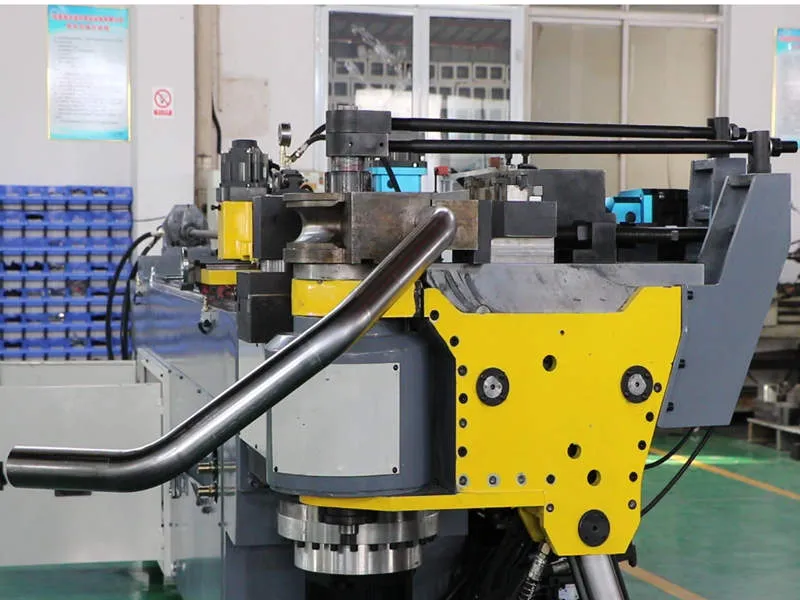
Primapress’s heavy duty pipe bending machines
When it comes to heavy duty pipe bending machines, any model 90 and above (including 90) is classified as heavy duty. Primapress provides a full range of NC semi-automatic and CNC fully automatic models that cover pipe diameters from 90 mm up to 219 mm, suitable for thick-wall pipes, large-radius bends, and industrial applications.
Heavy duty NC Series (semi-automatic)
| Model | Max Pipe Diameter | Automation Level | Suits For |
| 90NC | 90 mm+ | Semi-automatic (hydraulic) | Entry-level heavy duty, small workshops |
| 114NC | 114 mm+ | Cost-effective heavy duty bending | |
| 130NC | 130 mm+ | Medium-size production | |
| 168NC | 168 mm+ | Large thick-wall pipes | |
| 219NC | 219 mm+ | Extreme heavy duty bending |
Primapress NC pipe bending machines suit for workshops with skilled operators, medium batch sizes, and where cost-effectiveness is a priority.
Heavy duty CNC Series (fully automatic)
| Model | Max Pipe Diameter | Automation Level | Suits For |
| 90CNC | 90 mm+ | CNC full automation | Entry-level CNC heavy duty bending |
| 114CNC | 114 mm+ | Balanced performance, high precision | |
| 130CNC | 130 mm+ | Heavy industrial use | |
| 168CNC | 168 mm+ | Shipbuilding, oil & gas | |
| 219CNC | 219 mm+ | Extreme heavy duty, thick-wall pipes |
Primapress CNC pipe bending machines are recommended for manufacturers who need handle large-diameter steel or stainless steel pipes, requiring consistent results in mass production.
Specifications
| Feature | Specification Range |
| Pipe Diameter | 90 mm – 219 mm |
| Wall Thickness | Up to 16 mm (model dependent) |
| Bending Radius | 40 – 800 mm |
| Bending Angle | Up to 190° |
| Automation Options | NC (hydraulic) or CNC (servo-controlled, programmable) |
| Tooling | Mandrel, wiper die, multi-radius bending options |
Recommended models based on application
| Application | Recommended Models | Why |
| General heavy duty (90–114 mm pipes) | CNC110 / CNC114 | Strong bending force, reliable automation, cost balance |
| Extra heavy duty (130–219 mm pipes) | CNC130 / CNC168 / CNC219 | Large diameter + thick-wall capability, for oil & gas, shipbuilding |
| Budget-friendly option | NC114 / NC130 | Semi-automatic, lower cost but still powerful |
| Small workshop or entry-level heavy duty | 90NC / 90CNC | Compact, affordable entry into heavy duty pipe bending |
Matching the pipe bending machine’s specifications to workshop needs ensures long-term value. Consulting experts and using checklists helps avoid costly mistakes and maximizes the benefits of every bending operation.
FAQ
What is the maximum pipe diameter a heavy duty bender can handle?
Most heavy duty pipe bending machines support pipe diameters of 90mm and above. Some advanced models, such as CNC168NC, can bend pipes up to 168mm with wall thicknesses reaching 10mm.
How often should operators perform maintenance on a pipe bending machine?
Operators should perform daily visual inspections and cleaning. Lubrication and hydraulic checks should occur weekly. Monthly inspections include tightening bolts and cleaning filters. Annual calibration by a professional ensures optimal performance.
Can one machine bend different materials like stainless steel and aluminum?
Yes. Heavy duty pipe bending machines offer tooling options for various materials, including stainless steel, carbon steel, and aluminum. Operators must select the correct die and settings for each material to prevent damage.
What safety features do heavy duty pipe benders include?
Manufacturers equip machines with emergency stop buttons, safety sensors, and alarms. Compliance with ANSI safety standards protects operators and reduces workplace accidents.
Is CNC automation necessary for complex bending tasks?
CNC automation enables precise control for multi-angle and 3D bends. Workshops handling intricate designs or high-volume production benefit from CNC features, which improve accuracy and reduce manual errors


