
Getting perfect mandrel bends depends on your ability to harness the precision of a 3D pipe bending machine. Advanced CNC control and multi-axis operation deliver consistent results across diverse materials. Recent trends show real-time monitoring and intelligent automation can boost accuracy, minimize manual work, and help you achieve flawless bends.
- Real-time monitoring enhances process control.
- Intelligent automation reduces errors and increases efficiency.
3D pipe bending machine features

CNC and Servo Technology
CNC and servo technology form the backbone of modern 3D pipe bending machine systems. They use advanced computer controls and servo motors to deliver precise, repeatable bends. CNC programs guide every movement, reducing human error and ensuring consistent results. Servo motors and sensors allow for high accuracy, even with complex geometries. This level of automation means less reliance on operator skill and faster training for new staff.
| Feature | CNC Bending Machines | Traditional Systems |
| Control | Computerized, automated | Manual setup |
| Precision | High, repeatable | Operator-dependent |
| Automation | Minimal manual input | Constant operator input |
| Accuracy | ±0.1° on complex bends | Variable |
| Ideal Use | High-precision industries | General applications |
Multi-Axis and 3D Simulation
Multi-axis operation gives a 3D pipe bending machine the flexibility to handle intricate shapes in a single setup. 3D pipe bending machines with up to seven axes can bend, rotate, and position pipes for complex projects. 3D simulation software lets operators preview the entire process, spot potential collisions, and reduce trial-and-error. This technology saves time and material, making production more efficient. Visual previews and collision detection help prevent costly mistakes.
Key Factors for Bend Quality
Several factors influence the quality of each bend. Capabilities such as bending speed, radius, and material compatibility play a major role. Advanced features like AI, digital twin technology, and high-speed production boost both accuracy and efficiency. Leading brands such as Primapress, BLM Group, and WAFIOS offer machines that support a wide range of pipe diameters and wall thicknesses. The table below summarizes some advanced features found in today’s top machines:
| AI & Machine Learning | Predicts springback, reduces setup time by up to 40% |
| Digital Twin | Virtual testing, cuts material waste and lead times by 28% |
| 3D Bending Systems | 7-axis CNC, achieves under 0.15mm accuracy with titanium alloys |
| High-Speed Capability | Produces up to 1,200 brake lines per hour, diameter consistency of ±0.1 mm |
A 3D pipe bending machine with these features can help you achieve perfect bends, even with demanding materials and tight tolerances.
Mandrel bending essentials

Mandrel Bending Explained
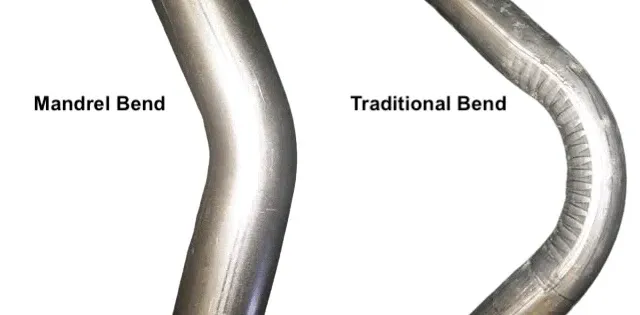
Mandrel bending stands out as a critical process for achieving smooth, defect-free bends in pipes and tubes. When using a 3D pipe bending machine, the mandrel supports the pipe from the inside during bending. This support prevents common issues such as internal wrinkles and reduces ovality, which is the unwanted transformation of a round pipe into an oval shape.
Ovality can cause flow restrictions, stress points, and sealing problems, especially in high-performance applications. Mandrel bending also enables tighter radius bends that would otherwise risk collapsing the tube.
Mandrel bending is important for various reasons: Bending thin tubing can be challenging since the walls tend to break under high stress. A mandrel makes the job easy and prevents the tube from breaking.
To further prevent defects, consider these best practices:
- Use internal mandrels for support.
- Reduce the centerline radius (CLR) ratio.
- Increase wall thickness (WT).
- Apply booster force during bending.
Types of Mandrels
Selecting the right mandrel type is essential for different materials and applications. Common mandrel types and their uses:
| Type of Mandrel | DescriptionFeatures | Applications |
| Plug Mandrel | Solid rod for thick tubes with long radii | Automotive exhaust systems |
| Form Mandrel | Metal rod with curved end for support | Gym equipment manufacturing |
| Ball Mandrel | Spherical ball for precise bends beyond the tangent | Aerospace tubes |
| Sand Mandrel | Tube filled with sand, heated before bending | Furniture frames, roll cages |
The correct mandrel type provides necessary support to prevent collapse and deformation. Different materials require specific mandrels. A hard mandrel works best for soft tubes, while a soft mandrel suits harder tubes.
Material Preparation
Proper preparation of pipes ensures optimal results with a 3D pipe bending machine. Follow these steps for best outcomes:
- Measure and mark the pipe accurately at the desired bend location.
- Cut the pipe to the correct length using recommended tools.
- Deburr the pipe to remove rough edges.
- Clean the pipe thoroughly to eliminate dirt and contaminants.
- Choose the right mandrel and dies based on material, wall thickness, bend radius, and angle.
- Secure the pipe with proper clamping and centering techniques.
Common materials processed with mandrel bending include aluminum, iron, copper, stainless steel, Inconel, and titanium. Pliable metals can withstand tighter bends without kinks, while stiffer metals may require more careful handling to avoid fractures. Environmental factors such as temperature and humidity can also affect metal behavior during bending, so monitoring these conditions helps maintain quality.
Secrets for perfect bends
Machine Settings
Achieving flawless mandrel bends starts with precise machine settings. Begin by selecting a mandrel that matches the tube’s inner diameter. Position the mandrel tip just ahead of the bend tangent point—typically by 0.5 to 1 mm. This placement supports the tube’s interior walls and prevents deformation, especially in thin-walled or small-radius applications. Adjust the pressure die force gradually. Reduce it to the minimum level needed to prevent tube collapse, but avoid over-compression, which can damage both the tube and tooling. Install a wiper die so its tip closely follows the bend’s tangent point. This addition smooths out wrinkles and maintains a uniform cross-section.
Bending speed plays a critical role. Set the speed too fast, and the tube may flatten or lose roundness. Set it too slow, and wrinkling may occur. Find a balanced speed that matches your material and bend radius. Mandrel position also affects results. Advancing the mandrel by 1 to 2 mm can improve bend quality, but excessive advancement may cause defects like the “goose head” phenomenon. Always monitor pressure settings. Improper pressure can lead to deformation or material failure. Use real-time monitoring systems to detect deviations instantly and make quick adjustments. These systems help maintain strict dimensional tolerances and reduce waste.
Tip: For thin-walled tubes or tight radii, mandrels are essential for maintaining roundness and preventing collapse.
Step-by-Step Bending Process
Follow a systematic approach for each bend to ensure consistency and quality:
- Prepare the Tooling Set
Gather all required tools: mandrel, clamp die, bend die, wiper die, and pressure die. Inspect each component for wear or damage. - Set Up the Tube
Insert the mandrel into the tube. Position the tube and mandrel correctly in the 3D pipe bending machine. Tighten all clamps to prevent slipping during the bend. - Adjust Machine Parameters
Set the bending speed, pressure, and mandrel position according to your material and bend requirements. Use the machine’s CNC interface to input precise values. - Simulate and Preview
Use 3D simulation software to preview the bend. Check for potential collisions or errors before starting the actual process. - Execute the Bend
Start the bending cycle. The CNC system will control the process, ensuring accuracy and repeatability. - Extract the Mandrel
Remove the mandrel during the last few degrees of bending or after the bend is complete. This step prevents damage to both the tube and the tooling. - Inspect the Bend
Check the finished bend for roundness, angle accuracy, and surface quality. Use real-time monitoring data to verify results.
Automation and digital monitoring enhance repeatability. Sensors detect deviations from design specifications, allowing for immediate corrections. This approach ensures each part meets quality standards and reduces material waste.
FAQ
What materials can a 3D pipe bending machine handle?
A 3D pipe bending machine can process aluminum, copper, stainless steel, titanium, and Inconel. Always check your machine’s specifications for material compatibility.
How do you prevent wrinkles during mandrel bending?
Select the correct mandrel type, adjust pressure settings, and use a wiper die. Proper setup and lubrication also help maintain smooth, wrinkle-free bends.
Can you automate quality checks with these machines?
Yes. Many advanced machines offer real-time monitoring and automated inspection. These features help you detect defects early and maintain consistent bend quality.


